

Expression Intelligence: Decoding Molecular Dynamics
Transforming Gene Expression Data into Biological Insight
Explore the molecular patterns that shape cellular identity, biological responses, and complex regulatory networks. Expression Intelligence brings together gene expression analysis, transcriptomic exploration, molecular data interpretation, and computational biology to support a deeper understanding of biological systems.
In modern life sciences, gene expression data provide a powerful window into cellular activity. By examining how genes are expressed across tissues, experimental conditions, developmental stages, and biological states, researchers can uncover meaningful patterns that reveal how living systems function, adapt, and respond to change.
Our scientific vision is to make molecular expression data more accessible, interpretable, and informative through structured analytical approaches and innovative data exploration strategies.
Explore expression. Discover patterns. Advance biological understanding.

A New Perspective on Molecular Expression
Gene expression is one of the fundamental mechanisms through which genetic information becomes biological activity. The abundance of RNA transcripts can reflect cellular states, regulatory mechanisms, environmental influences, and responses to experimental interventions.
Expression Intelligence explores this complexity by connecting molecular measurements with biological interpretation. Rather than viewing expression values as isolated numbers, we approach them as components of interconnected molecular systems.
Through comparative analysis, expression profiling, and transcriptomic data exploration, researchers can investigate similarities and differences between biological conditions, identify candidate molecular markers, and formulate new hypotheses about cellular processes.
Our approach supports the transition from large datasets to clearer scientific questions and more meaningful biological interpretations.
Understanding the Molecular Landscape
Expression profiling: Explore variations in gene activity across biological samples and experimental conditions.
Comparative analysis: Investigate differences between reference and experimental groups.
Transcriptomic exploration: Examine RNA-based measurements to characterize molecular responses.
Pattern recognition: Identify coordinated expression changes and relationships among genes.
Biological interpretation: Connect observed molecular patterns with pathways, cellular functions, and research hypotheses.
The Science Behind Expression Intelligence
1. Gene Expression Profiling
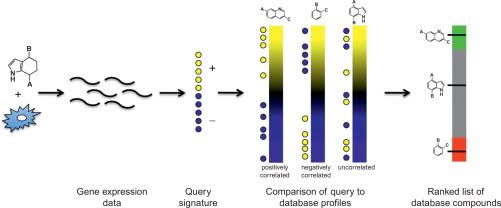
Gene expression profiling examines the activity of genes within a biological sample. Depending on the technology and experimental design, researchers can measure transcript abundance and compare expression levels across multiple conditions.
These analyses help investigate tissue-specific expression, cellular differentiation, disease-associated molecular changes, and responses to external stimuli.
By organizing expression measurements into interpretable profiles, scientists can identify genes that may warrant further investigation and explore the molecular characteristics of different biological states.
2. Transcriptomic Data Exploration
Transcriptomics provides a broad view of RNA molecules expressed within cells or tissues. Modern sequencing technologies generate extensive datasets that require careful processing, quality assessment, normalization, and statistical interpretation.
Expression Intelligence focuses on the analytical concepts that make these datasets scientifically useful, including sample comparison, expression distribution, transcript abundance, and relationships between experimental variables.
The objective is to support a more structured understanding of transcriptional activity while recognizing the limitations and assumptions of each analytical method.

3. Differential Expression Analysis
Differential expression analysis identifies genes whose measured expression levels differ between defined biological conditions.
For example, comparing treated and untreated cells can reveal candidate genes associated with a particular experimental response. Comparisons between healthy and diseased tissues may also highlight molecular differences that deserve additional study.
Reliable interpretation requires appropriate experimental design, biological replication, statistical testing, correction for multiple comparisons, and attention to effect sizes.
Differential expression results should be interpreted in their biological context rather than treated as definitive proof of a molecular mechanism.

4. Molecular Pattern Recognition
Biological processes rarely depend on a single gene. Many cellular responses involve coordinated changes across groups of genes, regulatory networks, and interconnected pathways.
Pattern-oriented analysis helps researchers investigate these relationships by examining expression similarities, clusters of genes, and coordinated transcriptional changes.
Such approaches can generate hypotheses about cellular functions, regulatory relationships, and molecular signatures that may distinguish biological conditions.
5. From Expression Data to Biological Meaning
The final stage of expression analysis involves connecting statistical observations with biological knowledge.
Functional enrichment analysis, pathway investigation, literature review, and independent experimental validation can help clarify the significance of candidate genes and expression signatures.
This process transforms a collection of measurements into a framework for scientific investigation, while maintaining a clear distinction between observed associations and experimentally demonstrated mechanisms.

Exploring the Expression Data Spectrum
Expression analysis encompasses several complementary analytical perspectives. Each provides a different way to investigate the molecular behavior of biological systems.
Expression Quantification
Examine the abundance of RNA transcripts using suitable measurement technologies and analytical workflows. Depending on the experimental platform, expression values may originate from microarrays, quantitative PCR, or RNA sequencing.
Comparative Expression Mapping
Compare expression profiles across samples, tissues, treatment groups, developmental stages, or environmental conditions to identify shared and distinct molecular characteristics.
Expression Signature Discovery
Investigate combinations of genes whose expression patterns may distinguish biological states or characterize specific experimental conditions. Candidate signatures require appropriate validation before clinical or diagnostic applications.
Gene Co-expression Analysis
Explore genes whose expression levels vary together across samples. Co-expression relationships can reveal potential functional associations, although correlation alone does not establish direct regulatory interactions.
Functional and Pathway Interpretation
Connect differentially expressed genes with biological processes, molecular functions, and cellular pathways using appropriate databases and enrichment methods.
Molecular Data Visualization
Use heatmaps, expression profiles, dimensionality-reduction plots, and other visual representations to communicate complex patterns and identify relationships that merit further investigation.
Technologies Supporting Modern Expression Analysis

RNA Sequencing
RNA sequencing enables the characterization and quantification of RNA transcripts across biological samples. It can support differential expression analysis, transcript discovery, alternative splicing investigations, and broader transcriptomic studies.

Quantitative Polymerase Chain Reaction
Quantitative polymerase chain reaction provides a targeted approach for measuring specific nucleic acid sequences. It is frequently used to evaluate selected gene expression targets and validate findings from broader transcriptomic experiments.

Microarray Expression Profiling
Microarray technologies measure the abundance of predefined nucleic acid targets using probe-based platforms. They remain relevant for established expression studies and comparisons involving compatible datasets.Read article

Single-Cell Expression Analysis
Single-cell transcriptomic technologies allow researchers to examine gene expression at the level of individual cells. These methods can help reveal cellular heterogeneity, identify distinct cell populations, and investigate differences that may be obscured in bulk tissue measurements.

Computational and Statistical Methods
Bioinformatics integrates data processing, statistical modeling, visualization, and biological annotation. Reproducible computational workflows are essential for interpreting complex expression datasets and ensuring that analytical decisions can be evaluated and repeated.
Artificial Intelligence and the Future of Expression Intelligence
The increasing scale of biological datasets is creating new opportunities for computational approaches that support molecular discovery.
Artificial intelligence and machine learning can assist researchers in identifying complex expression patterns, grouping similar profiles, exploring high-dimensional datasets, and prioritizing candidate genes for additional investigation.
When combined with sound experimental design and appropriate statistical methods, these approaches can help reveal relationships that may be difficult to identify through simple comparisons alone.
Applications Across Biological Research
Expression intelligence can support investigations across multiple areas of the life sciences.
Molecular and Cellular Biology
Study transcriptional regulation, cell differentiation, signaling responses, and changes in cellular identity under different experimental conditions.
Neuroscience
Explore gene expression patterns associated with neuronal development, cellular stress, neuroinflammation, and responses to experimental treatments. Expression findings can help identify candidate mechanisms for further investigation.
Immunology
Investigate transcriptional changes associated with immune activation, inflammatory signaling, cellular communication, and responses to biological stimuli.
Biotechnology and Pharmaceutical Research
Use expression measurements to investigate cellular responses, compare experimental conditions, characterize biological models, and support research-stage evaluations of candidate interventions.
Making Complex Data Easier to Explore
Scientific interpretation becomes more effective when complex information is presented clearly and consistently.
Expression Intelligence emphasizes the importance of structured data exploration and meaningful visualization. Heatmaps can reveal similarities between samples and groups of genes. Volcano plots can summarize estimated expression changes alongside statistical evidence. Principal component analysis can help examine major sources of variation across samples.
Other representations, including clustered expression profiles, correlation matrices, and pathway enrichment plots, provide complementary perspectives on molecular datasets.
The choice of visualization should reflect the scientific question, the characteristics of the data, and the limitations of the analytical method.
Clear visualization does not replace statistical rigor. Instead, it helps researchers examine evidence, communicate findings, and identify questions that require further analysis
 Building Reliable and Reproducible Expression Workflows
Reproducibility is essential to credible molecular research. Analytical results should be supported by documented procedures, transparent assumptions, and appropriate quality controls.
A robust expression workflow should include:
Clear descriptions of biological samples and experimental groups.
Appropriate biological replication and experimental design.
Documented preprocessing and normalization procedures.
Suitable statistical models and multiple-testing correction.
Transparent visualization and reporting of results.
Version-controlled analytical scripts and recorded software settings where applicable.
Independent validation of important findings.
These practices help distinguish robust biological patterns from technical artifacts and improve the comparability of research results.
Expression Intelligence promotes an analytical perspective in which data quality, methodological transparency, and biological interpretation are treated as interconnected elements of scientific discovery.
Research Questions Worth Exploring
Modern expression datasets raise important questions about the organization and regulation of biological systems.
How do gene expression profiles change when cells encounter environmental stress?
Which transcriptional patterns distinguish different cellular states?
How can researchers separate meaningful biological variation from technical noise?
Can coordinated expression changes reveal previously unrecognized relationships between genes?
How can single-cell measurements improve our understanding of heterogeneous tissues?
To what extent can machine learning improve the identification of meaningful molecular signatures?

Our Scientific Vision
Expression Intelligence is built around a simple principle: molecular data become more valuable when they are examined with scientific rigor and interpreted in their biological context.
By connecting gene expression profiling, transcriptomic analysis, computational methods, and biological knowledge, this concept brings together essential perspectives for understanding molecular dynamics.
Our vision is to encourage a deeper exploration of expression patterns, support informed scientific reasoning, and highlight the analytical approaches that help transform complex datasets into useful research insights.
We believe that progress in molecular biology depends not only on generating more data, but also on asking better questions, applying appropriate methods, and interpreting results responsibly.